
Skip to content

Umaid Asim · AI Leader & Entrepreneur

I help businesses decide what to build with AI, and I lead the team that builds it.

Co-founder & CEO of SensViz

We build AI applications and software products for startups and growing businesses. Before a client invests, we agree on what the product must change for its users, and how we’ll know it worked.

Umaid Asim, CEO and co-founder of SensViz.

Building SensViz

As co-founder and CEO, I’m building SensViz so founders can talk through their business problem directly with the people who will build the solution. Clients should understand every decision made on their behalf, and feel free to question it.

I lead the team the same way: give people a clear problem to solve and room to challenge the approach. I’d rather recommend a smaller solution than ask a client to fund complexity they don’t need.

I also lead AI strategy at SensViz. My job is to make sure every proposed product answers the business problem it was meant to solve, and that the team knows what to prioritise first.

From offices in Lahore and London, we work with clients internationally and build complete products: agentic AI, generative AI and LLM applications, automation, SaaS platforms, and web and mobile apps, connected to the systems a business already runs.

How I approach the work

Every product decision commits someone’s time and money. These are the principles I use to judge whether that commitment makes sense.

Find the problem worth solving

I start with the work someone is trying to get done. A slow process may need a better connection between existing tools. An unanswered question may need better access to information. Understanding that difference is part of deciding whether AI belongs in the solution at all.

Decide what the first release must prove

Before committing to a larger build, I want to know what would justify taking it further. That gives the team a basis for deciding what belongs in the first release and what can wait. Our AI business consulting supports founders working through those decisions.

Design for the people using it

People should be able to question a recommendation and correct a mistake. That is what human-centric AI means to me. With agentic AI, a system can choose steps and use connected tools, so it needs limits on what it can do independently. Human-in-the-loop review belongs where a wrong action carries consequences.

Test it where it can fail

A demo only shows the ideal case. Before release, we test the journeys that matter against weak inputs, uncertain model output and failing integrations, then watch how the product behaves in real use. Most of the valuable improvement work is found there.

Selected work through SensViz

Our team has worked on these four products at SensViz, each addressing a different need: finding funding, monitoring water quality, understanding vehicle issues and preparing job applications.

Project visualisations from each interface.

GrantMatch

Helping people find relevant funding
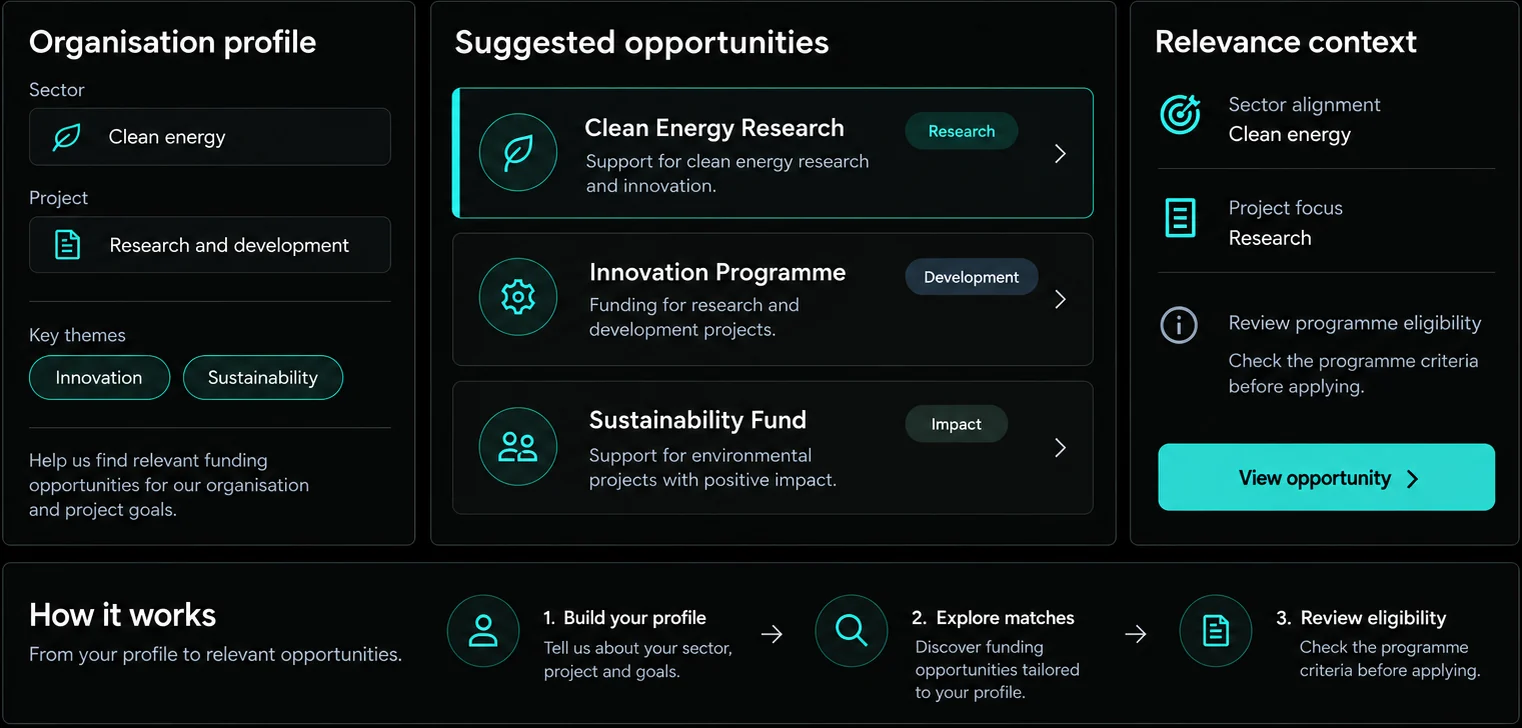
Funding discovery illustration showing an organisation profile, recommendations and match context.

Finding a grant is only useful if it fits the applicant. We helped build a platform that combines large language models with vector search and recommendation logic. Users can review funding opportunities selected around their profile and needs.

Scope: platform development and handover.
SIPP

Making water data easier to interpret

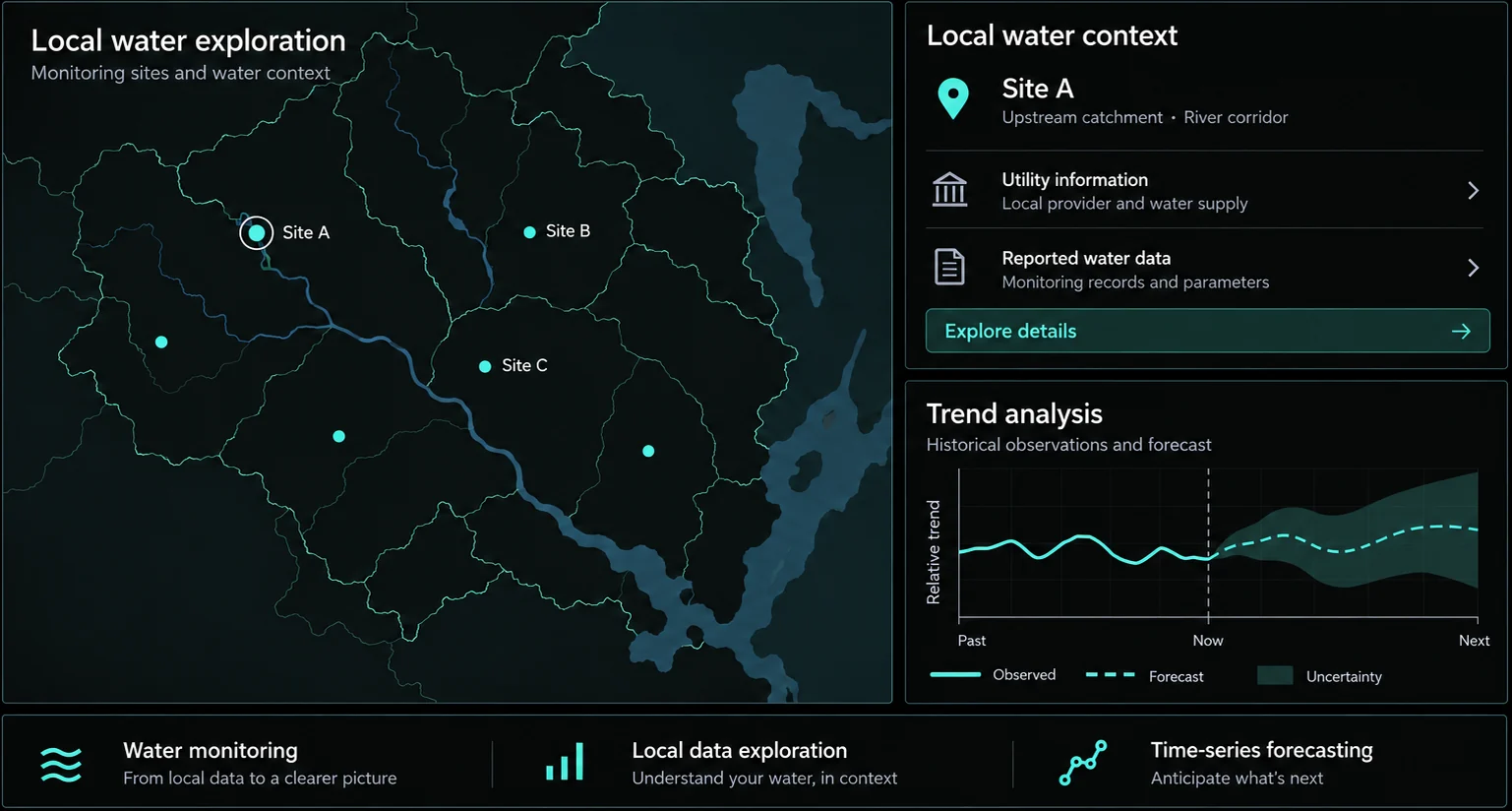
Water intelligence illustration with local site exploration and a schematic observed-versus-forecast chart.

A single reading tells only part of the story. Our contribution uses time-series forecasting to analyse water-quality data over time. Historical readings and forecasts let users examine how conditions are changing and what patterns may follow.

Scope: forecasting and monitoring support, not drinking-water safety certification.

Automotive AI

Making vehicle issues easier to understand

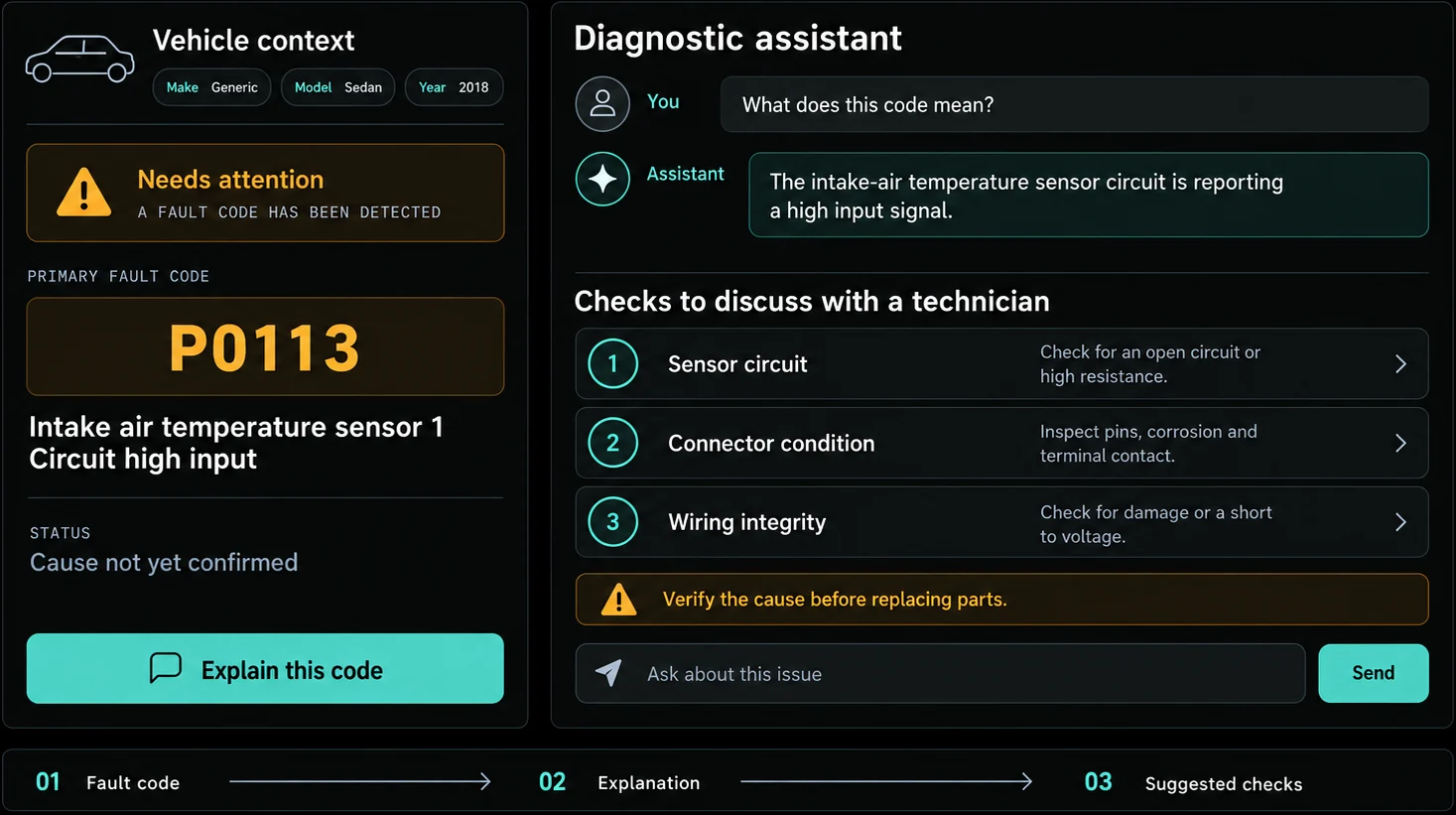
Automotive AI illustration pairing diagnostic fault analysis with vehicle-aware conversational assistance.

We built a system to help identify vehicle issues and suggest relevant fixes. Its AI chatbot lets users ask questions about diagnostic information and understand the suggested next steps.

Confidential client. Scope: diagnostic assistance and conversational AI within an existing product.

CareerPilot AI

Helping job seekers present their experience

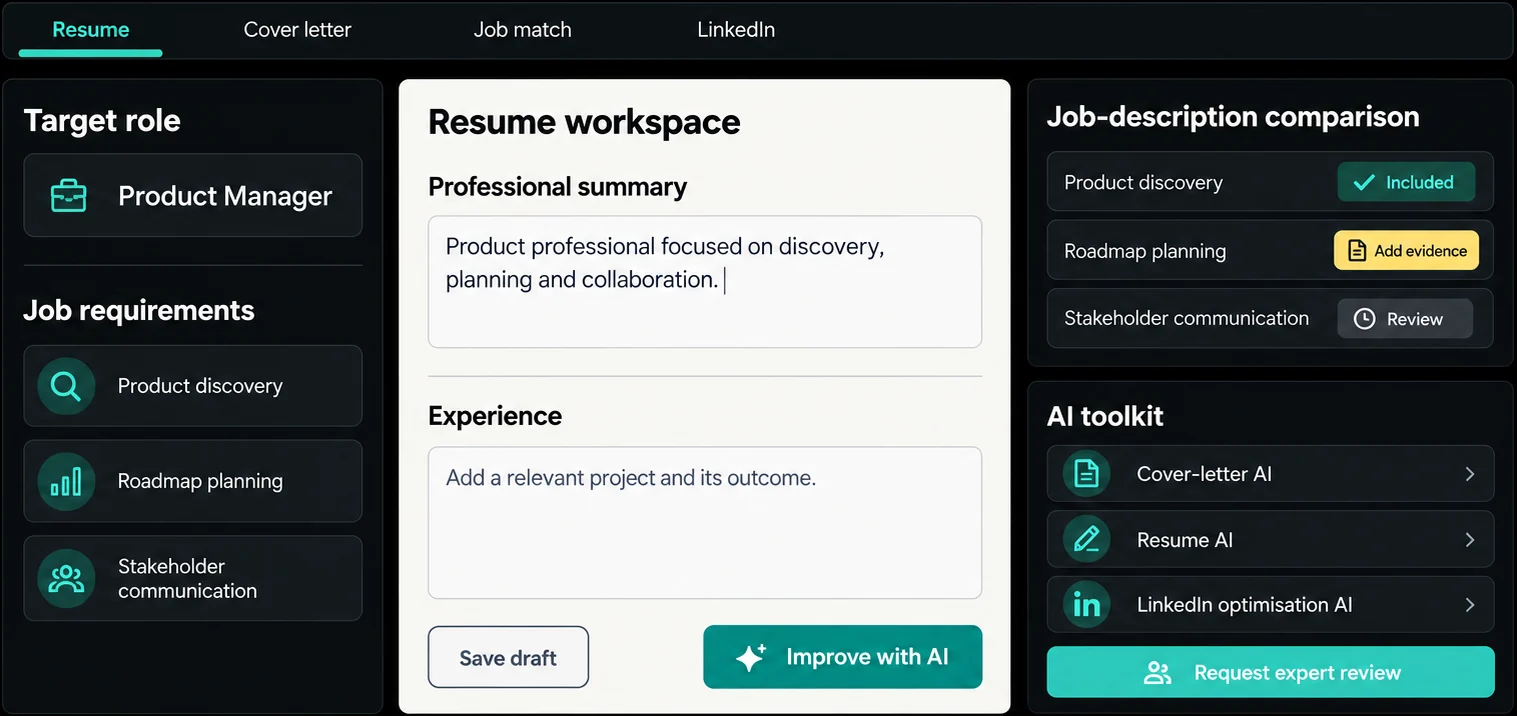
Career AI workspace showing resume editing, job-description comparison and an AI writing toolkit.

We brought AI assistance into a platform for resumes, cover letters and LinkedIn profiles. Users can compare a resume with a job description and revise its wording for the role. They can also request an expert review of its clarity and relevance.

Confidential client. CareerPilot AI is the portfolio title used here.

What I believe comes next

Three views shaping how I run SensViz as AI changes the way software is built, sold and paid for.

Software should be judged by what gets done

AI-native software should be judged by the work it takes off its user’s hands: how well that task gets done, and how much supervision it still needs.

That’s why I think engagements should be tied to agreed outcomes, and why we’re exploring Results as a Service (RaaS) at SensViz. Both sides need to agree how the result will be measured and who is responsible when it falls short. Without that agreement, an outcome promise has little substance.

Faster building needs clearer thinking

My view on spec-driven development is simple: write down what the software must do and how it will be checked before asking AI to build it. Faster development only helps if the team can still explain what it built. Written requirements give that speed a direction.

The model won’t be the advantage

Most teams now build on the same few foundation models, so the model alone rarely sets a product apart. The lasting difference comes from understanding a workflow deeply, using data responsibly and making the system dependable when inputs get messy. That’s where I want SensViz to compete.

Let’s talk

Have a product in mind, or a business problem you’re still making sense of? Tell me where you’re stuck and what you’d like to change.

You can reach me on LinkedIn to discuss an idea or a potential partnership. For a project you want our team to build, contact SensViz directly.